

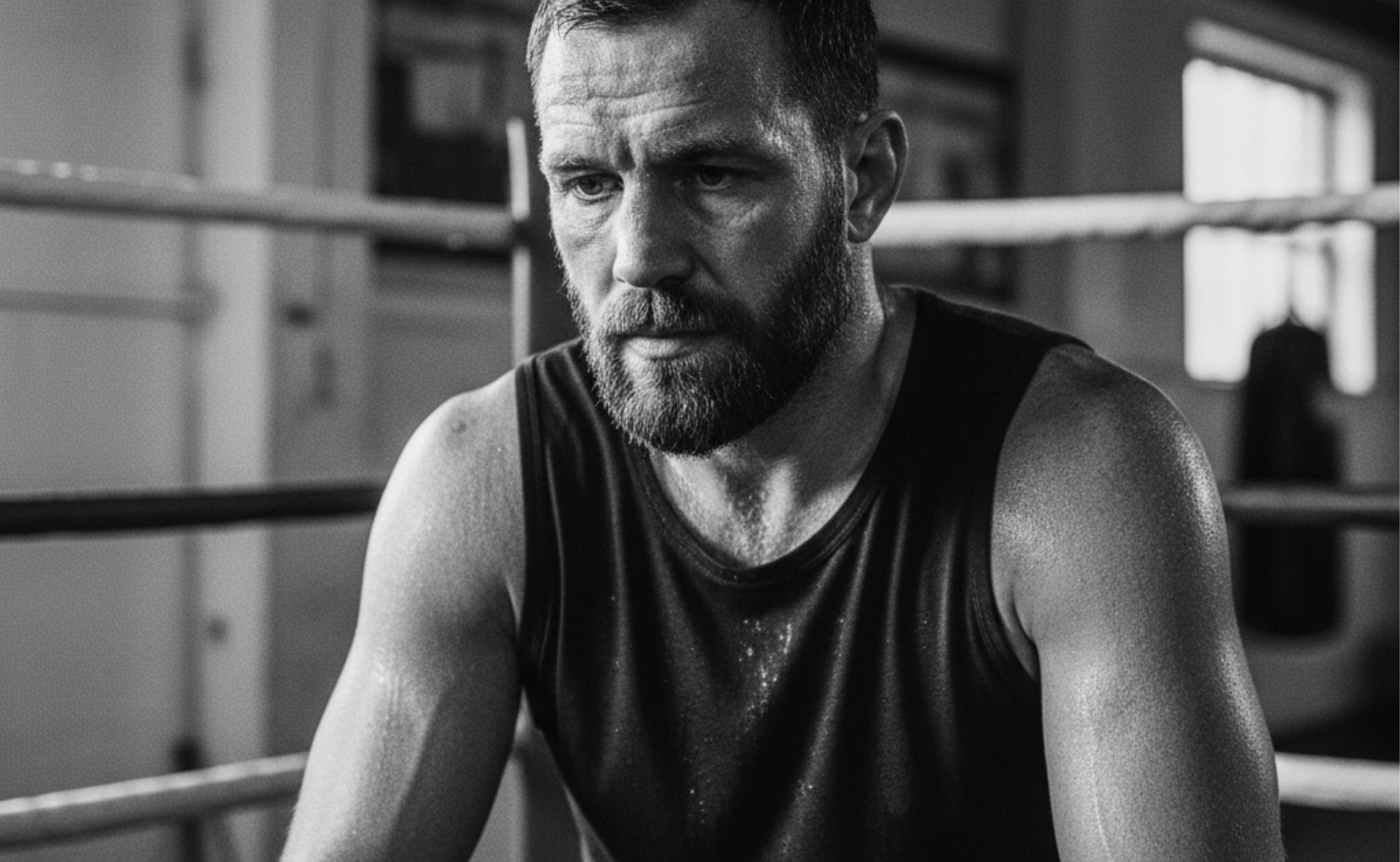
The Psychology of the Fighter
A Study in Control
Introduction
To the untrained eye, boxing appears chaotic. Violence, speed, and pressure dominate the surface. But beneath that exterior lies one of the most controlled psychological environments in sport. The fighter who succeeds is rarely the angriest or most aggressive. He is the one who can regulate his emotions, manage fear, and make decisions under extreme stress.
This is the psychology of the fighter. At its core, boxing is not a test of rage, but of control.

Emotional Regulation Under Pressure
Sports psychologists consistently identify emotional regulation as a defining trait of elite fighters. While adrenaline is unavoidable, unchecked emotion leads to poor decision-making, wasted energy, and defensive lapses.
According to Dr. Mark Andersen, a leading researcher in combat sports psychology, successful fighters are distinguished by their ability to remain task-focused under threat, rather than emotionally reactive (Andersen & Williams, Journal of Applied Sport Psychology).
In boxing, composure is not passive. It is actively trained. Fighters learn to control breathing under exhaustion, process pain without panic, and respond rather than react. This capacity for restraint often separates champions from contenders, shaping the standards that still define boxing culture and even how a boxing clothing brand is built around function and control rather than excess.
Fear as a Managed State
Fear is not eliminated in boxing. It is managed.
Neuroscience research shows that fear responses originate in the amygdala, triggering fight-or-flight reactions. Elite fighters train to override this reflex, allowing the prefrontal cortex to remain engaged for strategic thinking (LeDoux, The Emotional Brain).
This explains why experienced boxers often appear calm before bouts. It is not confidence alone, but familiarity with fear itself. Repetition conditions the nervous system to treat chaos as routine. Control, not courage, defines readiness.
Discipline and Delayed Gratification
The psychology of the fighter extends far beyond fight night. Boxing demands long-term discipline, routine, and sacrifice. From weight management to daily training, fighters must consistently delay gratification.
Research on self-control by psychologist Walter Mischel demonstrates that individuals capable of long-term goal regulation outperform peers in high-pressure domains (Stanford Marshmallow Studies). Boxing is a practical expression of this principle.
The fighter’s mindset is shaped by repetition over impulse, structure over indulgence, and process over reward. This discipline becomes identity, not just preparation.
The Ring as a Cognitive Environment
Inside the ring, fighters operate under extreme cognitive load. Fatigue, pain, crowd noise, and risk all compete for attention. Yet elite fighters maintain situational awareness.
Studies in attentional control show that high-level athletes filter irrelevant stimuli more effectively than novices (Abernethy, Perceptual-Cognitive Expertise in Sport). In boxing, this manifests as reading subtle shifts in balance, anticipating punches before they are thrown, and maintaining defensive responsibility while attacking.
This is why boxing is often called a thinking person’s sport. Intelligence is not optional. It is survival.
Control Versus Aggression
One of boxing’s greatest misconceptions is that aggression wins fights. History suggests otherwise.
Aggression without control leads to overextension, fatigue, and vulnerability. Fighters who dominate long-term are those who impose psychological pressure, not reckless force.
Legendary trainers have long emphasised this distinction. As Cus D’Amato taught, fear must be understood, not resisted. Control of fear leads to control of action. In this sense, boxing rewards restraint more than rage.
Why Control Defines the Fighter
The psychology of the fighter reflects a broader truth about mastery. Boxing strips away illusion. Under fatigue and threat, only habits remain. Those habits are built through discipline, repetition, and mental regulation.
The fighter who endures is rarely the loudest or the most violent, but the most composed. Control becomes both weapon and shield. This is why boxing continues to command respect across cultures, shaping not only how fighters train, but how they think and carry themselves. Clothing and image play a role in that identity, reinforcing discipline, resiliency, and purpose. Boxing apparel brands understand this, creating boxing gear with a focus on mindset as much as function, reflecting what the sport truly demands.
References & Further Reading
Andersen, M. B., & Williams, J. M. (1987). Psychological risk factors and injury in sport. Journal of Applied Sport Psychology.
LeDoux, J. (1996). The Emotional Brain. Simon & Schuster.
Abernethy, B. (1991). Perceptual-Cognitive Expertise in Sport. Elsevier.
Mischel, W. (2014). The Marshmallow Test: Mastering Self-Control. Little, Brown and Company.
D’Amato, C. (Referenced teachings and interviews on fear and discipline in boxing)

